


When installing a sun tunnel, one of the biggest choices you’ll face is whether to use a rigid tube or a flexible tube. Both options bring daylight into dark rooms, but they perform very differently. In fact, the type of tubing you choose can affect brightness, installation difficulty, long-term durability and overall cost.
This guide compares rigid and flexible sun tunnel systems in detail so you can choose the best option for your roof, loft layout and room size.
What’s the difference between rigid and flexible sun tunnels?
Although both types direct daylight from the roof to the ceiling, they work differently:
- Rigid tunnels use solid, highly reflective metal tubes.
- Flexible tunnels use bendable foil-lined tubing that can curve around obstacles.
Both have valid uses, but their strengths suit different installation scenarios.
Quick comparison: Rigid vs flexible sun tunnels
| Feature | Rigid Tunnel | Flexible Tunnel |
|---|---|---|
| Light output | Very high | Moderate |
| Reflectivity | Excellent (95–99%+) | Lower due to ridges |
| Tube shape | Solid, straight sections | Bendable foil tube |
| Best for | Maximum brightness | Avoiding obstacles |
| Typical tube length | Short–long (up to 6m+) | Short (<2m) |
| Installation | More precise | Easier, faster |
| Cost | Higher | Lower |
| Condensation risk | Lower | Higher if sagging |
| Longevity | Excellent | Shorter lifespan |
| Suitable for complex lofts | Sometimes | Very good |
| Suitable for bathrooms | Yes | Only short runs |
Rigid sun tunnels explained
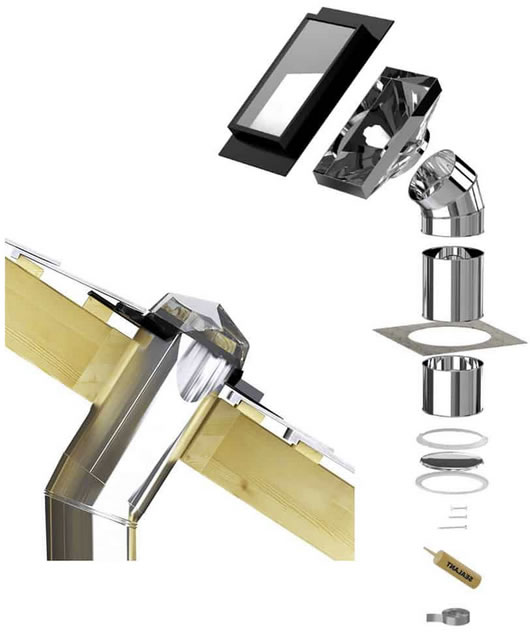
Rigid sun tunnels use a series of straight, reflective metal or aluminium tubes. Because light travels along a smooth reflective surface, brightness remains extremely high even over longer distances.
Advantages of rigid tunnels
Rigid tubes offer several benefits:
- far brighter daylight
- better performance on cloudy days
- very low light loss
- ideal for longer pipe runs
- excellent for larger rooms
- long lifespan with minimal degradation
They are the preferred choice for kitchens, lofts, hallways, open-plan spaces, and rooms that need strong illumination.
Disadvantages of rigid tunnels
However, rigid tunnels have limitations:
- they cannot bend sharply
- require more space in the loft
- installation takes slightly longer
- higher upfront cost
Despite this, rigid tunnels usually deliver the best long-term value due to superior brightness.
Flexible sun tunnels explained
Flexible tunnels use foil-lined material (similar to high-quality ducting) that can bend around rafters, pipes, tank stands and awkward angles.
Advantages of flexible tunnels
Flexible systems are particularly useful when:
- the loft is cluttered
- the tube path cannot be straight
- access is tight
- the run is short
- you want the cheapest option
They can be installed quickly—sometimes in under two hours.
Disadvantages of flexible tunnels
Flexible tubes have important drawbacks:
- lower brightness due to light scattering
- light loss increases with length
- sagging can form water traps
- condensation is more common
- foil can degrade faster over time
For these reasons, flexible tubes are best for very short runs (typically under 2 metres).
Light performance comparison
Here’s how the two types compare in real-world UK homes:
| Factor | Rigid Tunnel | Flexible Tunnel |
|---|---|---|
| Brightness | Very high | Lower |
| Light loss over distance | Minimal | Significant |
| Suitable run length | Long | Short |
| Performance on overcast days | Excellent | Moderate |
| Ideal for large rooms | Yes | Not ideal |
Rigid tunnels outperform flexible tunnels in almost every lighting category.
Installation differences
| Installation Factor | Rigid Tunnel | Flexible Tunnel |
|---|---|---|
| Loft space needed | More space | Minimal |
| Ability to bend around obstacles | Limited | Excellent |
| Installation time | 2–4 hours | 1–2 hours |
| Required precision | Higher | Lower |
| Risk of sagging | None | Possible |
Rigid systems demand more precision, while flexible tubes prioritise convenience.
Cost comparison (UK)
| Cost Type | Rigid Tunnel | Flexible Tunnel |
|---|---|---|
| Product price | £200–£800 | £150–£400 |
| Installation | £400–£700 | £350–£550 |
| Total cost | £600–£1,500 | £500–£900 |
Flexible systems are cheaper, but rigid tubes give better long-term value.
Which one lasts longer?
Rigid tunnels
- Lifespan: 20+ years
- Very durable
- Resistant to sagging and degradation
Flexible tunnels
- Lifespan: 10–15 years
- Foil liner can degrade with heat and humidity
- More prone to condensation and wear
Rigid tubes clearly win for longevity.
When rigid tunnels are the best choice
Choose rigid if:
- brightness matters
- the tube run is more than 1–2 metres
- the room is large
- the loft layout allows a straight path
- long-term durability is a priority
Rigid is almost always better for:
- kitchens
- living rooms
- bedrooms
- large hallways
- open-plan areas
When flexible tunnels are the best choice
Choose flexible if:
- your loft space is obstructed
- the run is very short
- the roof is hard to access
- you need a simple, budget-friendly solution
- the daylight requirement is modest
Best for:
- small bathrooms
- small stairwells
- utility rooms
- alcoves or tight spaces
Which type is best overall?
For most UK homes, rigid sun tunnels are the better choice due to superior brightness, lifespan and performance in cloudy weather.
However, flexible tunnels still have their place—especially when obstacles prevent a straight run.
Get free quotes for rigid and flexible sun tunnel installation
If you’re unsure which type suits your home, you can request up to four free quotes from vetted UK installers. They can check your loft space, measure the tube path and recommend the right system for your roof and budget.


Pingback: Best Rooms for Sun Tunnels | Hallways, Lofts, Bathrooms