

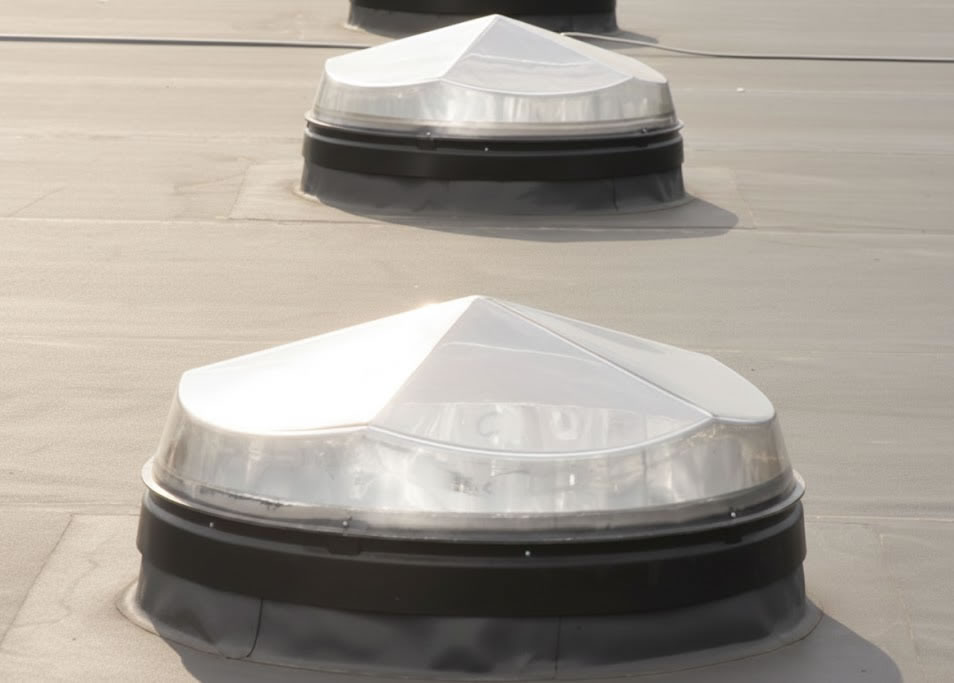
Flat roofs are increasingly common on extensions, garages, loft conversions and modern new-builds. These spaces often lack natural daylight, making flat roof sun tunnels an ideal solution. They brighten dark rooms using a rooftop dome or flat glass collector that channels daylight through a reflective tube into the home below.
This guide explains how flat roof sun tunnels work, what they cost, how they are installed, and which products are best suited to UK homes.
How flat roof sun tunnels work
Flat roof sun tunnels capture daylight using a dome or flat glass unit mounted on the roof surface. Light travels down a rigid reflective tube and enters the room through a ceiling diffuser. Because flat roofs receive consistent daylight across the day, sun tunnels perform well even in overcast conditions.
A flat roof sun tunnel includes:
- a dome or flat glass collector
- a rigid or flexible reflective tube
- a flat-roof flashing and waterproof membrane
- an interior diffuser
They are suitable for felt, EPDM, GRP, asphalt and single-ply membrane roofs.
Benefits of flat roof sun tunnels
Homeowners choose flat roof sun tunnels because they offer:
- bright, natural daylight in dark rooms
- quick installation with minimal disruption
- no major roof alterations
- improved energy efficiency
- suitability for most types of flat roof materials
They work well in kitchens, hallways, bathrooms, garage conversions and single-storey extensions.
Installation process for flat roof sun tunnels
Fitting a sun tunnel on a flat roof is more specialised than a pitched roof installation because waterproofing is essential. A typical installation includes:
- inspecting the roof structure and checking membrane condition
- marking the opening for the dome or flat glass collector
- cutting the roof deck and preparing the opening
- installing the flashing system and integrating it into the roof membrane
- sealing all edges to ensure full weather protection
- fitting the rigid tube and connecting it to the diffuser below
- insulating around the tube to reduce condensation
- installing the interior diffuser and testing light output
Most installations take between two and four hours.
Cost of flat roof sun tunnels (UK 2025/2026)
Flat roof installations cost more than pitched roof systems due to the waterproofing requirements.
Typical UK price ranges:
- standard flat roof sun tunnel installation: £1,200 to £2,200
- premium systems (Solatube / Velux): £1,600 to £2,800
- complex or long tube runs: £2,000 to £3,200
Costs vary depending on access, roof condition, tube length and chosen brand.
Flat roof flashing and sealing
Waterproofing is the most important part of a flat roof sun tunnel installation. Installers may use:
- EPDM-compatible flashing kits
- GRP resin systems
- bitumen membrane kits
- Solatube or Velux proprietary flat roof bases
A reliable installer ensures the dome integrates fully with the existing roof membrane, preventing leaks and long-term issues.
Best sun tunnel brands for flat roofs
Solatube
Excellent performance on flat roofs due to high reflectivity tubes and specialist flat roof bases. Ideal for long or complex runs.
Velux
Popular and reliable. Offers flat roof sun tunnels with durable domes and high-quality flashing systems.
Fakro
Mid-range option suitable for simpler flat roof installations. Good value for money.
LiteLite
Affordable choice for basic installations with short distances between roof and ceiling.
Rigid vs flexible tubes for flat roofs
Flat roof installations benefit most from rigid tubes, which deliver stronger daylight and less light loss over distance.
| Tube Type | Best Use | Brightness | Notes |
|---|---|---|---|
| Rigid | Most flat roof installs | High | Best performance on long runs |
| Flexible | Short, tight spaces | Medium | Easier to fit but lower brightness |
Common problems and how to avoid them
Condensation
Flat roofs are more prone to condensation due to colder roof surfaces. Insulation sleeves and vapour barriers help prevent moisture build-up.
Leaks
Leaks usually occur when flashing is not integrated properly into the membrane. Using a qualified installer reduces risk significantly.
Low brightness
Long flexible tubes or poor positioning can reduce light output. Rigid tubes provide brighter, more consistent daylight.
Where flat roof sun tunnels work best
Flat roof sun tunnels perform particularly well in:
- rear kitchen extensions
- internal bathrooms
- utility rooms
- garage conversions
- new-build rooms with flat roofing
- large single-storey extensions
They provide natural light without losing privacy or requiring major construction work.
Get free flat roof sun tunnel installation quotes
Tell us about your flat roof and room layout and receive up to four free quotes from vetted UK installers. All specialists are trained to work with EPDM, GRP, felt and asphalt roofs and ensure proper waterproofing.
Frequently asked questions
Can you put a sun tunnel in a flat roof?
Yes. Flat roof sun tunnels are common and work well when installed with the correct flashing and membrane sealing.
Does a flat roof dome let in enough light?
A dome or flat glass collector captures a wide angle of daylight, providing excellent brightness.
Are flat roof sun tunnels more expensive?
Yes, because of specialised waterproofing and flashing requirements.
Can a flat roof sun tunnel leak?
It can, but professional waterproofing significantly reduces the risk.
How long does installation take?
Most flat roof installations take two to four hours.